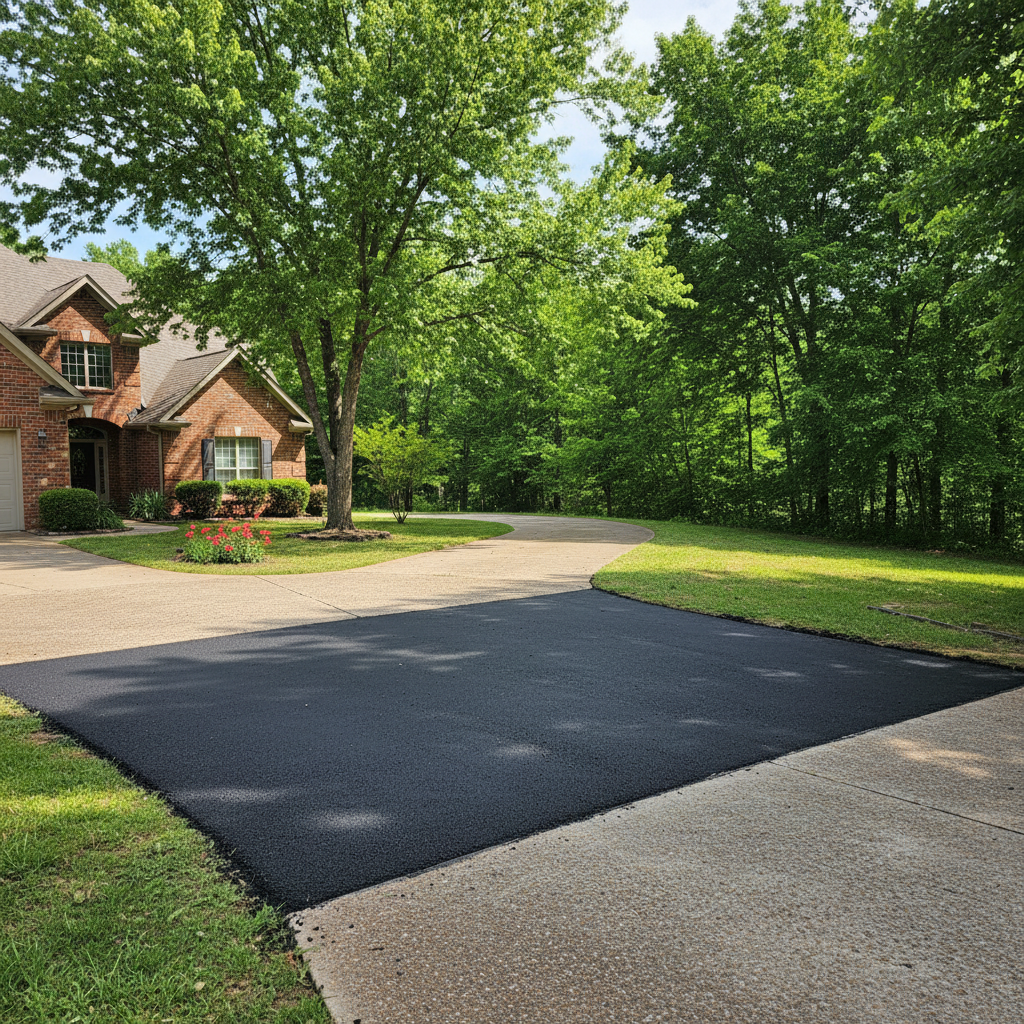
So, you've had some asphalt patching done, maybe on your driveway or a commercial lot right here in Springdale. That's a smart move, fixing those potholes and cracks before they spread like wildfire. But getting the patch done? That's only half the battle. If you don't take care of it, you'll be calling me back sooner than you'd like, and honestly, nobody wants that.
Making Your Asphalt Patch Last Longer
You want your patch to last, right? It's not rocket science, but it does take a little common sense and a few good habits. First off, give it time to cure. Especially after a fresh patch, try to keep heavy traffic off it for at least 24-48 hours. I know it's tough, but driving over it too soon can mess up the compaction and bond, particularly with our hot Arkansas summers. That fresh asphalt really needs to settle in.
Another big one is drainage. Water is asphalt's worst enemy. If you've got standing water on or around your patched area, it's going to find its way underneath and start eroding the base. That's actually how potholes start in the first place. So, make sure your gutters are clear, and if you see puddles forming, think about how you can get that water to move. Sometimes it's as simple as sweeping away debris that's blocking its path.
And here's a tip specific to our area: be mindful of those heavy rains we get, especially in spring. A sudden downpour can really test a new patch if it hasn't fully cured or if the surrounding drainage isn't quite up to snuff. We've seen it happen in neighborhoods like Elm Springs, where older driveways might not have the best slope.
Regular Maintenance: What You Should Do
Regular maintenance isn't just for the big stuff; it's about the little things that add up. Keep the patched area clean. Sweep away dirt, leaves, and gravel. Debris can hold moisture against the asphalt, and if it freezes and thaws repeatedly (which it definitely does here in winter), that's a recipe for cracks.
Another thing I always tell folks: sealcoating. It's like sunscreen for your asphalt. A good sealcoat every few years protects the surface from UV rays, water, and even oil spills. It keeps the asphalt flexible and stops it from drying out and getting brittle. Think of it as a protective layer over your patch and the rest of your asphalt.
If you see small cracks starting to form near the patch, don't ignore them. Filling those minor cracks with a quality crack filler is cheap insurance. It stops water from getting in and expanding, which is what turns a small crack into a big pothole.
Warning Signs of Trouble
You don't need a degree in civil engineering to spot trouble. Just keep an eye out for these things:
- New Cracks: Any new cracks appearing around the patch, especially if they're spiderwebbing or running deep. That means the patch isn't holding, or the underlying base has issues.
- Sinking or Rising: If the patched area starts to sink below the surrounding pavement or, conversely, rises up, that's a red flag. It usually points to a problem with the base material or improper compaction during the original repair.
- Loose Aggregate: Are you seeing loose stones or gravel on the surface of the patch? That means the binder is failing, and the patch is starting to unravel.
- Potholes Reforming: If a pothole reappears in or right next to a patched area, the initial repair might not have addressed the root cause, or the patch itself has failed.
- Water Pooling: As I mentioned, standing water is bad news. If you notice water consistently pooling on or around the patch after rain, you've got a drainage issue that needs fixing.
When to Call a Professional
Look, I'm all for DIY, but some things are just better left to the pros. You should definitely call someone like us at Omega Paving Solutions if:
- You're seeing any of those warning signs I just listed, especially sinking, rising, or widespread new cracking. These often point to deeper structural problems that a quick fix won't solve.
- The patched area is failing quickly after the repair. If it's only been a few months and you're already seeing significant issues, something went wrong, and it needs a professional assessment.
- You've got large areas of damage. Trying to patch a huge section yourself usually leads to an uneven, temporary fix that costs more in the long run.
- You're not sure what's causing the problem. Sometimes it's not just a surface issue; it could be a sub-base problem, and we've got the equipment and experience to diagnose that.
- You just don't have the time or the right tools. A proper asphalt repair requires specific equipment and materials to ensure a lasting job.
Taking care of your asphalt patches isn't just about how they look; it's about protecting your investment and preventing more expensive repairs down the road. A little attention goes a long way, especially with our crazy Arkansas weather cycles.